
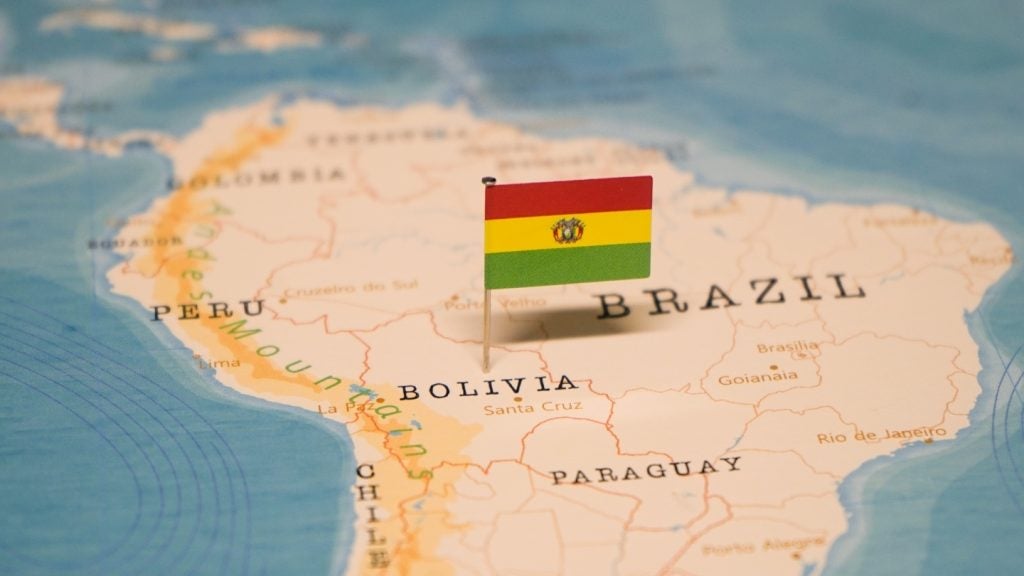
The International Monetary Fund (IMF) has reached a staff-level agreement with Bolivia on a $1.9bn Extended Fund Facility (EFF) to support the country’s economic reform programme.
The programme is aimed at restoring macroeconomic stability, rebuilding international reserves, reducing fiscal and external vulnerabilities, strengthening social safety nets, and supporting private sector-led growth.
Bolivian authorities are also pursuing a broader package of structural reforms focused on protection for vulnerable households, better governance and transparency, modernisation of monetary and exchange rate frameworks, and a stronger financial sector.
The IMF-supported programme is expected to help secure additional financing from the World Bank, the Inter-American Development Bank and other development partners.
This would form part of a broader financing package valued at more than $5bn over the life of the programme.
Bolivia has faced significant macroeconomic pressure in recent years, linked to persistent fiscal deficits, declining hydrocarbon production, lower reserves, high inflation, and distortions in foreign exchange and product markets.
These factors have restrained economic activity, increased external risks and reduced real incomes.
Measures on the fiscal side are designed to place the public debt-to-GDP ratio on a durable downward trajectory.
The approach includes expenditure rationalisation, more targeted spending, wider social protection, revenue mobilisation and stronger fiscal institutions.
The press statement said additional budgetary resources would be directed to social protection to ensure consolidation does not fall on the poorest, alongside measures to reduce informality and strengthen employment prospects.
In monetary policy, the authorities have already started changing their framework and moving towards a more flexible exchange rate.
These steps are described as important for price stability and the rebuilding of reserves, while also supporting a transition towards inflation targeting.
The authorities have also maintained a commitment to zero monetary financing of the deficit.
Planned financial sector reforms include changes to supervision, crisis preparedness, alignment with international standards, and stronger anti-money laundering protections.
The agreement still requires approval from the IMF's executive board.
Between May and July 2026, a team of IMF staff headed by Joana Pereira engaged in discussions with Bolivian officials, meeting both within Bolivia and in Washington, DC.
At the end of the discussions, Pereira said: “The authorities will advance holistic reforms to improve the business environment, reduce product market distortions, and strengthen institutions.
“Measures will also seek to improve public investment efficiency and strengthen legal frameworks to promote private investment, thereby unlocking Bolivia’s growth potential.”