

A little panda called Bo is bouncing on my phone screen, urging me to take some photos. Using the latest in AI image generation I could place myself alongside a Chinese Terracotta Warrior, fully dressed in battle armour. But today, the virtual experience meets the real thing, as I tour the spectacular Terracotta Warriors Museum in Xi’an, Shaanxi province, central China.
I’m investigating the recent transformation of the tourism industry in the province, centred around the site of the first Emperor’s tomb. Yesterday I visited a Tang Dynasty extravaganza at the Grand Tang Mall (also known as Datang Everbright City) and later today I will visit the Huanqing Palace and Gardens, at Mount Li, all hugely popular domestic tourist destinations.
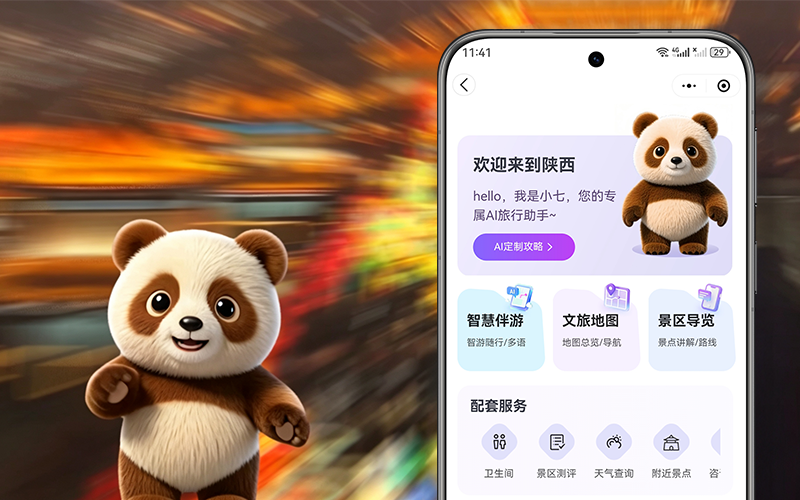
I have been fortunate to have experienced guides translating for me and handling all my bookings. But what if I didn’t have access to such assistance? This is where AI-driven tourism apps come in. But while they can certainly help book tickets, answer questions and make suggestions, the real difference is felt once you are ‘on-site.’ These apps are designed to enhance your visit with virtual tours, and especially during busy periods, generating AI photos and videos for sharing, even placing ‘live’ images of you in authentic period dress at heritage sites.
Apps such as GO-SHAANXI are just the starting point on Shaanxi’s digital innovation journey, however. Behind this little panda, is a whole hidden realm of 5G-A connectivity and an industry-first multimodal large language model (LLM) dedicated specifically to heritage preservation and driving growth in one of China’s most important domestic industries – cultural tourism.
How important is tourism in China?
Official data from China’s Ministry of Culture and Tourism[i], states that in 2025, over 6.5 billion domestic trips were made in China, equating to around 6.3 trillion yuan (~US$905 billion) in domestic tourism spending. The vast majority is for leisure and family visits, with GlobalData’s Traveller demands & flows database[ii], indicating that the most engaged cohort are travellers aged 15 to 24. This trend indicates a sustainable long-term demand driven by younger consumers seeking immersive and lifestyle-orientated experiences.
Indeed, around ‘Golden Week’ and public holidays, leading destinations such as Beijing, Shanghai, Xi’an, Chengdu, and Zhangjiajie frequently experience intense crowding at their top attractions. Whereas European tourists like myself are used to a more sedate experience of heritage sites – more observation and less interaction – I’ve noticed that many Chinese tourists seem to crave a much more rounded experience: one they can actively participate in, share with friends back home, and even later recreate with their own families.
A robust data foundation
At the forefront of this cultural tourism transformation in Shaanxi, is a strategic partnership between Huawei and the Shaanxi Culture Industry Investment Group (SCG), which aims to revolutionise the cultural tourism landscape through AI and digital technologies.
Initially, the cultural tourism sector faced several challenges, including fragmented data systems, bottlenecks in model adaptation, a significant talent gap, and high costs for small and medium-sized enterprises. To address these issues, Huawei and SCG developed a comprehensive ecosystem encompassing six core capabilities: data, model, computing power, applications, talent, and ecosystem. This initiative focuses on a seamless integration of technology and cultural heritage, ensuring that the authenticity and integrity of historical sites are preserved while enhancing the overall tourist experience.
A key component of their strategy is the establishment of a robust data foundation. Huawei and SCG have developed 12 high-quality cultural tourism datasets in Shaanxi, drawing from government, corporate, third-party, and internet sources. This extensive data collection supports a range of AI applications, including AI video generation, AI photography, and digital heritage preservation, designed to enrich the way cultural content is created and consumed, and offering tourists a more immersive and engaging experience.
It also offers a highly scalable blueprint for other regions to rapidly enhance their tourism experiences, using AI to bring local culture to life for visitors while being easily adaptable to each destination’s unique stories and strengths.
The economic impact of BoGuan
During my visit to Xi’an, Wang Peng, Director of Cultural Tourism Business, Computing Platform, Huawei, and Jin Yan, Chairman of the Digital and Intelligent Culture Technology Group at SCG, introduce the “world’s first” commercial multimodal cultural tourism model, jointly developed by Huawei and SCG.
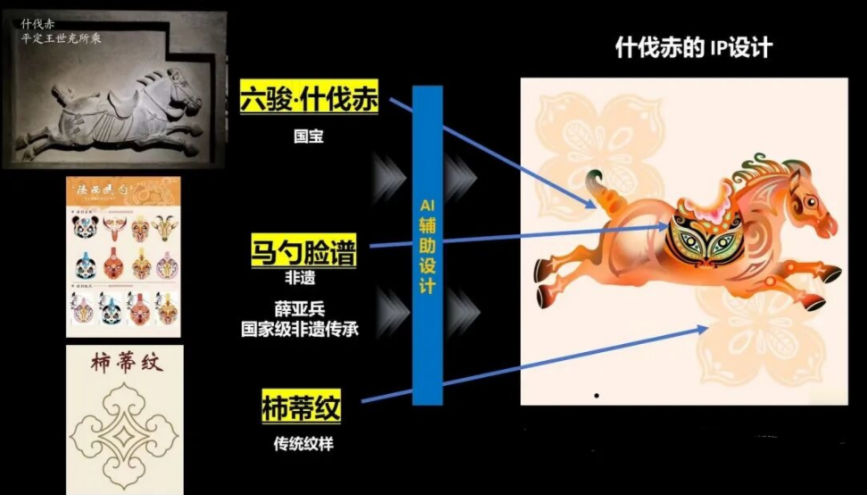
The BoGuan multi-modal model, provides specialised AI services for cultural tourism, overcoming the limitations of generalised AI models by integrating ten closed-source and open-source models into the BoGuan Cultural-Tourism Large Model Platform. This integration is powered by high-quality datasets, ensuring the generation of accurate high‑fidelity content, but with low barriers to adoption.
Wang highlights the importance of balancing digital innovation with the authenticity of historical sites. He notes that this approach is evident in projects like Digital Dunhuang[iii] and the Digital Great Wall[iv], where technology is used to preserve and present cultural heritage in a way that respects its historical significance.

The economic impact of these initiatives is significant, with Shaanxi witnessing substantial growth in both tourist arrivals and revenue. Pang Bo, Deputy General Manager of SCG, explains that in 2025, Shaanxi welcomed 862 million domestic tourists, generating a total tourism spend of approximately 824.3 billion RMB. Meanwhile, inbound visitor numbers rose 98% year‑on‑year, with spending up 101%. Jin also notes a 30 to 40% increase in direct bookings revenue.
Looking to the future, Huawei envisions AI becoming a core infrastructure component within the cultural tourism industry. It anticipates data ‘assetisation’ and the use of AI agents will become mainstream, further transforming the way cultural tourism is experienced and managed.
How does 5G technology enhance cultural tourism?
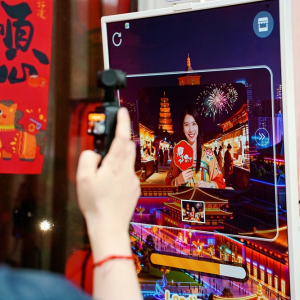
In Xi’an, a city rich in cultural heritage, digital access to sites allows visitors to engage more deeply with the region’s history, customise their experiences, create and adjust travel itineraries, and receive real-time recommendations for performances and attractions. Across Shaanxi province, the 5G‑A user base has already passed 6 million and continues to grow.
For instance, the Zhiying Camera mini program, powered by the BoGuan LLM, offers ‘time travel’ style photos that blend user images with AI‑generated historical scenes from Shaanxi’s 3,000‑year history. It also lets visitors virtually handle heritage artifacts, a privilege usually reserved only for museum curators. These innovations both enhance the visitor experience and open new revenue streams by capitalising on high‑quality cultural tourism data.
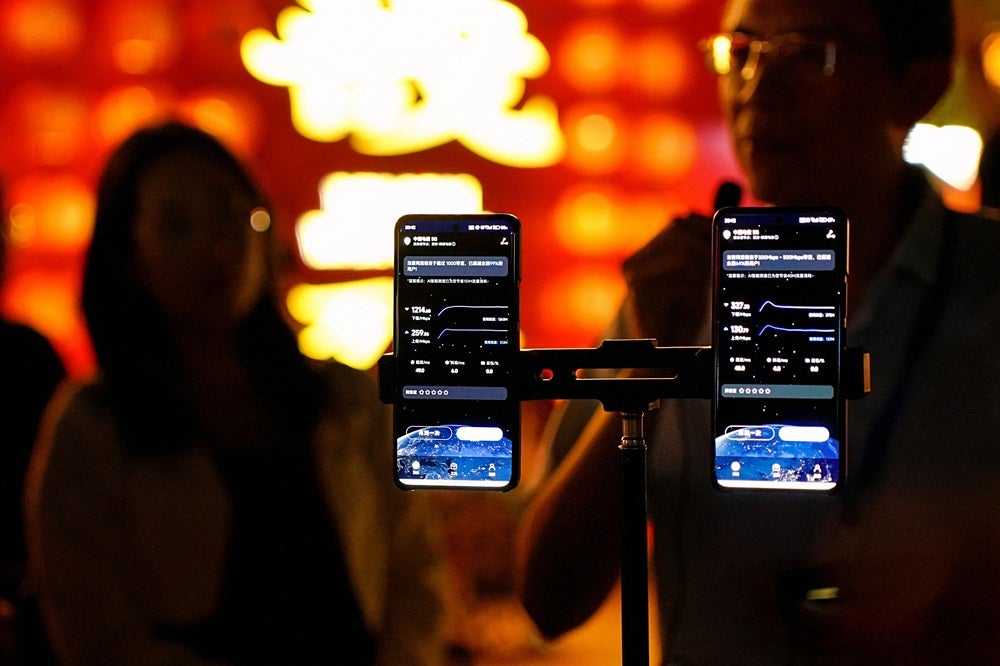
In another example, Huawei and China Telecom Shaanxi implemented a 5G-A network at The Grand Tang Mall, one of China’s most popular tourist attractions, which combines colourful historical re‑enactments with traditional craft displays, music and dance. The 5G-A network installed at the mall delivers uplink rates of 900Mbps and supports concurrent access for around 50,000 visitors. In addition, it enables smooth live HD video streaming, an important way to attract and engage new audiences, with a reported increased average spend of 62% per customer at the attraction.
Keeping tourists continuously connected
During my stay in Shaanxi, I experienced first-hand how AI and other digital technologies are being woven into the cultural tourism industry, and it’s clear that these tools are not just eye‑catching add‑ons; they’re helping preserve cultural heritage while making visits richer, more engaging and easier to share.
[i] https://www.chinadaily.com.cn/a/202601/27/WS69780bbea310d6866eb35dcc.html
[ii] https://www.globaldata.com/media/travel-tourism/china-cements-its-position-as-a-leading-source-travel-market-powered-by-domestic-scale-and-outbound-momentum-says-globaldata/
[iii] https://www.e-dunhuang.com/
[iv] http://english.scio.gov.cn/chinavoices/2024-02/23/content_117015907.htm
