
Microsoft says it will invest A$25bn ($18bn) in Australia by 2029 to expand digital infrastructure, alongside commitments on cybersecurity, artificial intelligence (AI) development and skills training.
The US tech giant said the funding package – which it described as its largest in Australia – will be used to grow its Azure AI supercomputing and cloud footprint locally, lifting capacity by more than 140%.
The plan follows an earlier A$5bn ($3.6bn) commitment announced in October 2023, which expanded Microsoft’s data centre presence to 29 sites across three Azure regions.
Microsoft framed the plan as supporting Australia’s National AI Plan and wider digital economy goals.
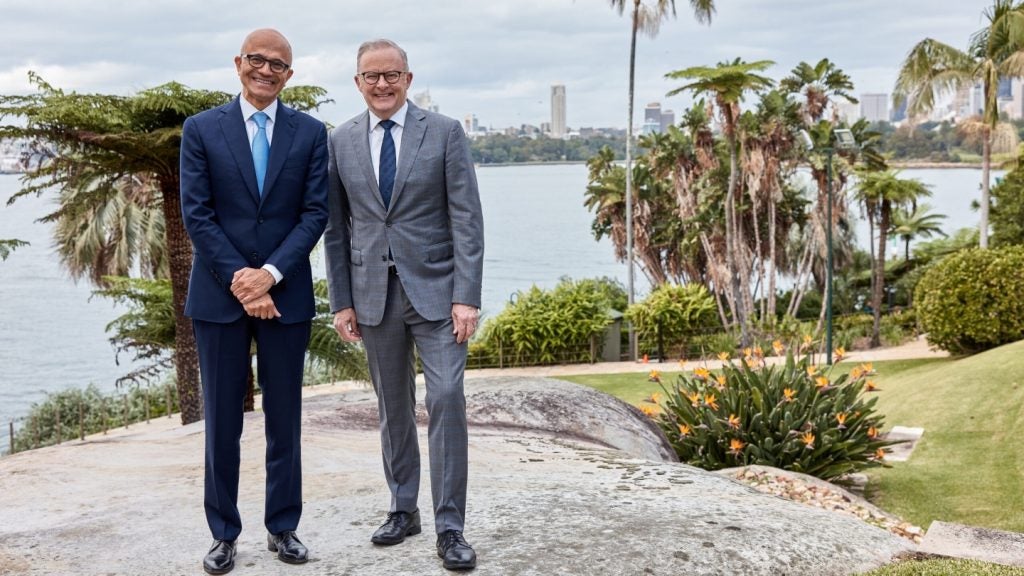
Microsoft chairman and CEO Satya Nadella said: “Australia has an enormous opportunity to translate AI into real economic growth and societal benefit. That is why we are making our largest investment in Australia to date, committing A$25bn ($18bn) to expand AI and cloud capacity, strengthen cybersecurity, and expand access to digital skills across the country.”
It also includes a memorandum of understanding (MoU) with the Australian Government, described as aligning with national expectations for data centres and AI infrastructure developers.
Microsoft said the MoU covers areas including clean energy use, sustainable water management, local employment and strengthening research capability.
On AI governance, Microsoft said it will work with the Australian AI Safety Institute to monitor and assess advanced AI systems and to support responsible deployment.
Cybersecurity measures are also part of the programme.
Microsoft said it will broaden its Microsoft–Australian Signals Directorate Cyber Shield (MACS) initiative with the Australian Signals Directorate to cover more federal agencies.
It also flagged closer work with the Department of Home Affairs to improve resilience across connectivity, data centres and hyperscale cloud infrastructure.
Microsoft said the MACS programme has secured more than 38,000 government accounts, found 35 previously unknown vulnerabilities and produced a Microsoft Sentinel-based solution that integrates with the government’s Cyber Threat Intelligence Sharing programme.
Separately, Microsoft said it aims to train three million Australians in workforce-ready AI skills by 2028.
It said this extends an earlier target to train one million people across Australia and New Zealand by 2025, which it reported was met ahead of schedule.
Microsoft also cited EY-Parthenon analysis attributing a A$36bn ($25bn) contribution to the Australian economy in the 2025 financial year, with more than 186,000 full-time equivalent jobs supported.
Australian Prime Minister Anthony Albanese said: “Our National AI Plan is all about capturing the economic opportunities of this transformative technology while protecting Australians from the risks.
“Microsoft’s long-term investment in our national capability will help deliver on that plan – strengthening our cyber defences and creating opportunity for Australian workers and businesses,” he added.