

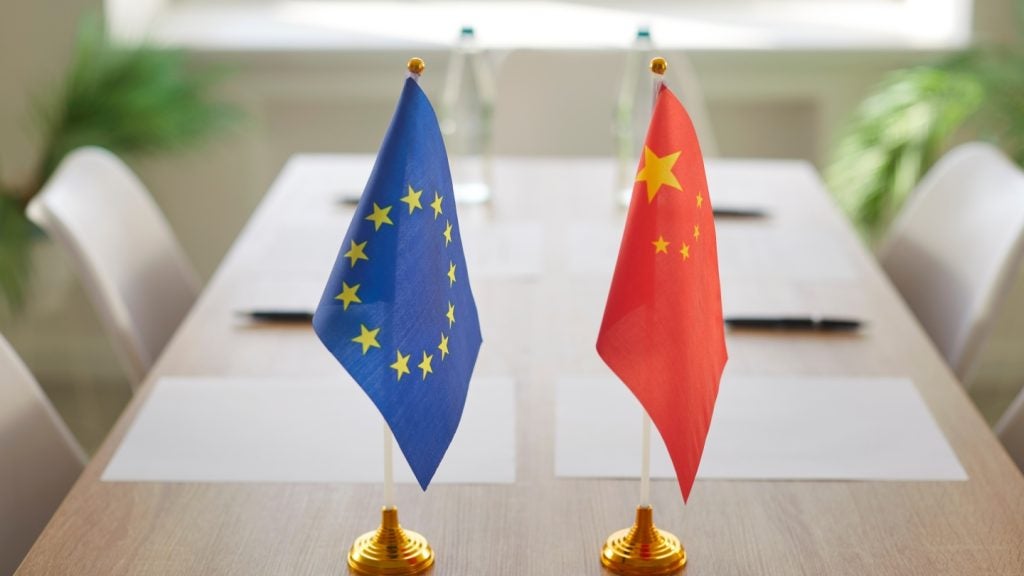
European Union (EU) heads of government met in Brussels, Belgium, to address the bloc's widening goods trade imbalance with China, which is now running at roughly €1bn ($1.15bn) daily.
According to Reuters, EU diplomats noted a growing consensus among member states that the deficit has become a serious and deteriorating concern – made worse by tighter access to the US market under new transatlantic tariffs.
China's goods trade surplus with the EU climbed to €360.6bn ($413.4bn) in 2025, up 15% year on year, and expanded by a further 10% in the opening four months of 2026 as Chinese exports to Europe rose whilst EU shipments to China fell.
Pressure on European industry has been further amplified by Beijing's restrictions on rare earth exports, introduced in April 2025 as a counter-measure to US tariffs, leaving EU manufacturers dependent on Chinese-processed critical minerals in a difficult position.
Summit conclusions tasked the European Commission with securing concrete outcomes from trade dialogues with key partners and ensuring the bloc retains effective tools to defend its economic interests.
Leaders also backed deeper trade diversification, building on mineral supply agreements and free trade deals signed with Australia, India, and Indonesia over the past year.
Divisions over the right course of action, however, remain pronounced.
France favours a more confrontational stance, whereas Germany and Spain have counselled restraint.
Italy, France, the Netherlands, and Lithuania last month put forward a joint proposal to reduce dependence on individual foreign suppliers – potentially through additional duties or quotas.
Spain, originally named as a co-signatory, subsequently withdrew its support.
Spanish Prime Minister Pedro Sanchez said: “We need friends, we need balanced relationships. We need to be pragmatic, and we need to build bridges both with major economies – potential allies such as China – and traditional allies, such as the US."
Luxembourg's Prime Minister Luc Frieden said he favoured dialogue with China, whilst insisting trade relations must be fair and not “a one-way street”.
Of 21 ongoing anti-dumping and anti-subsidy probes, 18 already focus on Chinese producers.
Tariffs on Chinese electric vehicles, in force since 2024, prompted retaliatory steps from China targeting EU dairy and brandy exports.
The Commission noted that although EV imports dipped initially, Chinese producers shifted towards hybrid vehicles and EV shipments have since recovered.
A comprehensive review of trade defences is scheduled for the third quarter of 2026, with options under consideration including requirements for EU firms in sensitive sectors to maintain at least three alternative sourcing arrangements.