

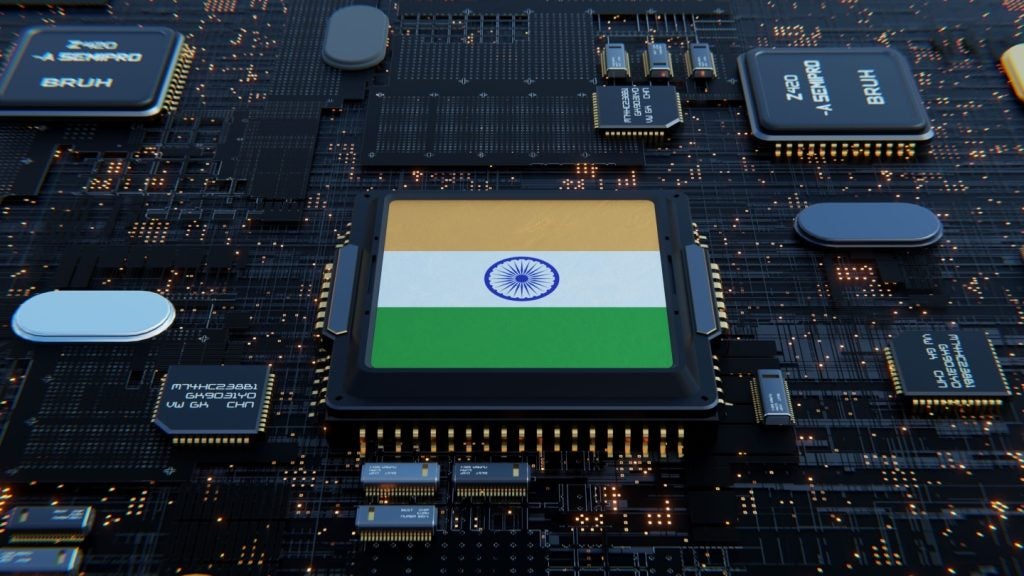
India has attracted roughly Rs1tn ($10.43bn) in investment pledges from domestic and international investors since rolling out its Semicon 2.0 policy.
Speaking to media at Semicon India 2026, Union Minister for Electronics and Information Technology Ashwini Vaishnaw set out how the policy is being implemented and the progress made on investment so far.
Vaishnaw noted that Semicon 1.0 had focused on establishing the groundwork for the country's semiconductor sector, whereas Semicon 2.0 is intended to broaden the ecosystem and expand capacity throughout the value chain.
Companies are expected to finalise board and shareholder approvals over the coming two to three years, at which point the committed investments will begin to take shape.
Semicon 2.0—intended to establish a comprehensive, end-to-end semiconductor and display ecosystem in India—is built on six pillars: design, machinery and materials, fabrication plants, advanced packaging, research and development, and skills development.
Under the design pillar, the government is aiming to support 200 semiconductor design start-ups, an increase from the 105 backed during the initial phase, 20 of which have already obtained venture capital backing.
The machinery and materials pillar are intended to build up domestic supply for manufacturing equipment and inputs, while the fabrication pillar spans display, memory, silicon, compound and logic manufacturing.
Additional support will go towards advanced packaging development and collaborative research spanning industry, government and academic bodies.
On skills, around 400 universities and institutions currently offer semiconductor chip-design training, with the government aiming to train 100,000 technicians within five years, partly through collaboration with overseas bodies such as Taiwan's Industrial Technology Research Institute.
Vaishnaw said the initiative's aim goes beyond setting up individual production sites, extending to building a full ecosystem that includes domestic capability in capital equipment, materials, gases, chemicals, precision manufacturing and supply chains.
He added that competitiveness on quality and cost remains central at every stage, from project selection through construction to production, noting that facilities already producing commercially are vying for a share of the global market.
Semicon India 2026 also saw 11 memorandums of understanding and five announcements spanning manufacturing, packaging, materials, equipment, design and skills training.
These developments follow the Cabinet's July approval of Semicon 2.0, carrying a total outlay of Rs1.27tn.