
Following the barrage of tariff announcements by US President Donald Trump in April, headlines warned of a harsh economic downturn. These predictions have not exactly materialised, at least as of yet, but a new report suggests that the relative economic stability of 2025 is more nuanced.
According to UNCTAD’s Trade and Development Report 2025: On the Brink, the 4% growth the global economy experienced this year was mainly driven by frontloading ahead of tariff deadlines, as well as large-scale investments in the AI sector. However, it notes that “the resilience we see is thinner than it looks and masks structural weaknesses”. If these two factors are removed, growth falls to between 2.5% and 3%, with a stronger slowdown looming.
Go deeper with GlobalData

Discover B2B Marketing That Performs
Combine business intelligence and editorial excellence to reach engaged professionals across 36 leading media platforms.
The tariff announcements also precipitated a divergence of the historical pattern of dollar appreciation in the face of market volatility, due to its position as a global safe-haven asset. Instead, US treasury yields increased, while the dollar sharply depreciated. The report notes that, despite this weakening, the dollar still maintains its global dominance, especially given that no alternative currency has risen in popularity to take its place.
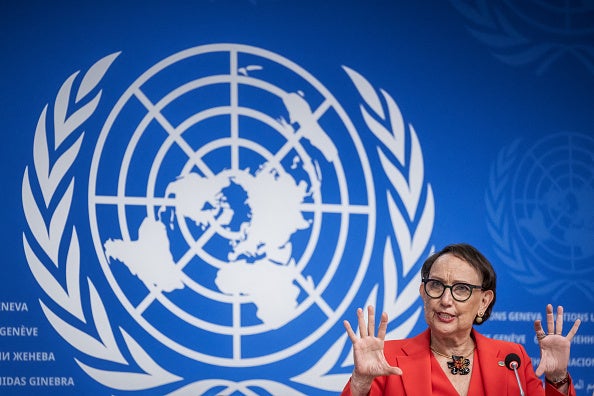
At an event marking the launch of the report earlier this week in London, UNCTAD Secretary General Rebeca Grynspan noted that in finance, “we see more concentration in the dollar and less and less activity or weight of the Global South in the financing pocket”.
A central theme of the report is the financialisation of trade and the implications this has had for the Global South. It notes the cause-and-effect relationship between trade and finance, where any peaks or troughs in the former directly impact the latter in the same way. It has meant that trade is highly sensitive to changes in factors such as interest rates or investor sentiment in financial hubs in the Global North, such as the US and the UK.
This relationship has left developing countries in a particularly vulnerable position. In the past three decades, the Global South’s share of trade and investment has significantly increased. For example, South-South FDI inflows have grown fourfold since the 1990s, from a 9% average to 32% by 2020–23. Still, access to the financial flows that drive trade has remained limited.
US Tariffs are shifting - will you react or anticipate?
Don’t let policy changes catch you off guard. Stay proactive with real-time data and expert analysis.
By GlobalData“You see the South representing 40% of trade today, 40% of GDP [gross domestic product], 50% of FDI [foreign direct investment], and you look at the finance, and there is no match,” Grynspan noted.
Despite growth in domestic financial markets since 2008, the total market capitalisation of developing economies remained less than half of the Global North’s by the end of 2024. This means that companies and governments often have to resort to foreign markets to raise capital.
“Africa, for example, is paying between four and eight times the interest rate that Europe or the US are paying – and if you look at the fundamentals, [they do not] justify that. So, there is a problem here with the debt structure and with the conditions of the market,” Grynspan said.
While debt defaults remain low, Grynspan suggests that this is only because local leaders know that this would not help their economies, since it would mean a years-long wait to restructure the debt and no more borrowing opportunities. “So they default on development instead of defaulting on the debt,” she added.
The burden of debt on domestic spending also complicates the ability of climate-vulnerable nations to adapt. UNCTAD highlights that, in this sense, developing countries face a two-pronged problem. Climate-related shocks hurt economic growth, and borrowing becomes more expensive as creditors raise rates aligned with higher risks, which then makes it harder to borrow funds to invest in economic growth. The report notes that countries more exposed to climate risks have debt costs that are 117 basis points higher than average.
Going forward, the report calls for reform to the global financial system to help vulnerable countries; the expansion of regional financial cooperation; strengthening of the domestic financial ecosystem; addressing emerging financial risks beyond the banking sector; and promoting multilateralism.
In the past year, international organisations have faced significant funding cuts and a decline in US support. The UN, for one, faces a $500m cut in next year’s budget and a loss of 20% of its staff following funding cuts from US President Donald Trump’s administration.



