

The tariff chaos of 2025 shifted the global economy away from the previously low-barrier, free-trade business environment it had been accustomed to. In the face of a more protectionist world, interest in special economic zones (SEZs), where the lack of tariffs and abundance of dedicated streamlining processes give businesses some respite, has risen.
The United Arab Emirates (UAE) is the eighth country in the world (tied with South Korea) in terms of number of SEZs. More than 40 zones offer specialised business incentives, each catering to a specific set of industries depending on their existing infrastructure and track record.
Go deeper with GlobalData

Discover B2B Marketing That Performs
Combine business intelligence and editorial excellence to reach engaged professionals across 36 leading media platforms.
One of these is the Ras Al Khaimah Economic Zone (RAKEZ), just an hour north of Dubai. RAKEZ focuses on small and medium-sized enterprises (SMEs) across different sectors. Recently, RAKEZ Group CEO Ramy Jallad spoke with Investment Monitor about how SEZs should navigate the current period of economic uncertainty, the importance of aligning a local strategy with a national one, using AI effectively and providing renewable energy options for clients.
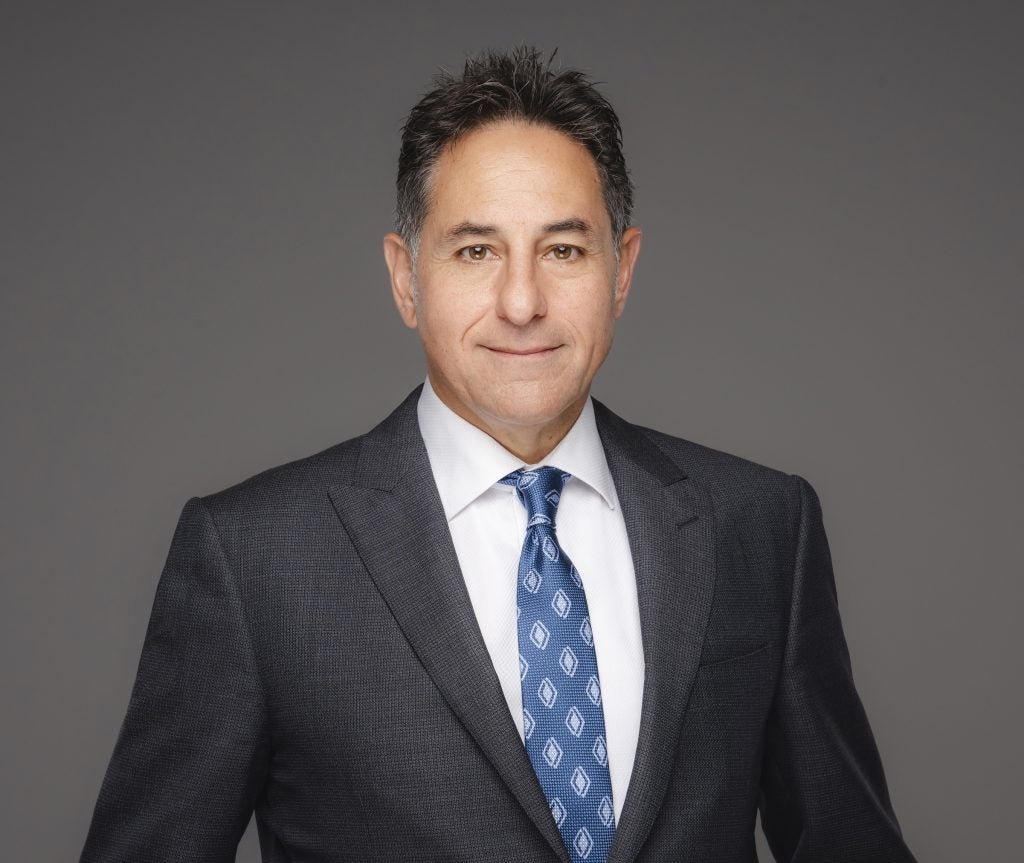
Credit: Ramy Jallad.
Eugenia Perozo (EP): Ever since ‘Liberation Day’ last April, there has been more interest in SEZs and what they can offer companies during this period of uncertainty. Have you noticed more interest from foreign companies in the past year?
Ramy Jallad (RJ): I think all economic zones are not equal. It depends on the supportive ecosystem that they have, which supports business, trade, bilateral relations, the country that they are in. Those bilateral relations between strategic countries are very important. That is where we, in the UAE, work hand in hand with the vision of our leaders to make sure the country always has this competitive advantage in terms of its bilateral relations with countries around the world.
Going back to these tariffs and the geopolitical situation, I think we are ideally suited as an SEZ in the UAE to address these issues, and that is what attracts foreign direct investment (FDI) and customers from all over the world today. The UAE has many CEPA agreements – such as the existing one with India or the ones being drafted with the UK and Malaysia.
RAKEZ is taking those federal and local [incentives], tweaking them and adapting them to attract the right type of clients so that they can come in, produce and trade. And yes, I have seen so many companies from all over the world, India, Asia, Singapore, even Europe, coming here to produce goods so that they can get those localisation incentives and the benefits of these trade agreements that exist with other countries around the world.
US Tariffs are shifting - will you react or anticipate?
Don’t let policy changes catch you off guard. Stay proactive with real-time data and expert analysis.
By GlobalDataEP: What does collaboration with the UAE’s Government looks like in terms of aligning your strategy and vision?
RJ: Every economic zone has its own target audience, sectors, clients, and so on. It is what you set up your economic zone to be ready for. Depending what your infrastructure is ready for, what we target, what our success stories have been, what we are capable of doing. It all really feeds into our strategy and FDI attraction.
We do work very closely with the federal government. They have certain strategic pillars, for example, making the UAE’s manufacturing high-tech. Those are the things that we adopt. It is not imposed, it is more about aligning with the vision of the country and then adapting it to the vision of our local government, our leaders, our enablers, our ecosystem – and we work hand in hand to do that.
EP: As the CEO of an SEZ that has a particular focus on manufacturing, what changes have you observed in the way that AI is being integrated and how do you expect that to continue to unfold in 2026?
RJ: AI is being used everywhere, from email automation to fully automated dark rooms in manufacturing facilities. I see that in nearly all of the manufacturing companies that I am going to. I have seen that all in visiting and meeting industrial clients or even SMEs that are in that space.
We are also working with top-notch technology companies to see how we can have more mobility and 5G and the Internet of Things for clients when they do come into our logistics centres. Making sure they are plug and play and that this is an ecosystem that has the ability for connectivity and mobility.
There is a lot of clutter in that area, so you have got to select what you want to do and really take a path – and our path is always what will benefit our clients. What would they be looking for so that they can grow and come into a plug-and-play environment that is suitable for their operations?
EP: RAKEZ recently signed a memorandum of understanding (MoU) with Emerge and EDF Power Solutions, enhancing its renewable energy offerings. How can SEZs balance the shift towards renewable energy while staying competitive? What makes a company choose one energy source over another?
RJ: We are definitely working on our environmental, social and governance (ESG) strategy. So that MoU that we signed with one of the Masdar companies, is where they provide solar energy or renewable energy to our clients, and they basically provide them the power and the cost of that infrastructure in a very nice payment plan so that it encourages clients to take on board that renewable energy.
Everybody has a different motivation. There are clients who ship to Europe, and their own vendors, suppliers or end clients prefer to deal with supply chains that use alternative and sustainable energy. That motivates them to start that journey. Yes, sometimes it is more expensive, but the business outweighs the cost. Some clients are motivated by their own ESG strategy. I think with time, this price variation will become less and less.
EP: How do you expect the role of SEZs to evolve in 2026 during this period of economic uncertainty?
RJ: I believe that the future looks good. I think this economic uncertainty is really a motivator for many businesses around the world as they really look at where they are going to grow. It just means that there will be a shift in business from one place to another. There will be more expansions, operating more cost effectively, more globally, and finding new markets. It hasn’t slowed down RAKEZ in terms of FDI attraction. On the contrary, it has opened many doors from many different countries and opened up new markets.
RAKEZ has also opened a new economic zone totally focusing on web3, AI and tech, called RAK Innovation City. That is really focusing on a new sector and industry. In terms of high-tech, we are opening a new zone called Tech Flex, which is totally dedicated to high-tech companies who are in robotics, high-tech, electronics, and many other areas. We see that as a growing industry.
This interview has been edited for length and clarity.



