At Diriyah, sustainability is not managed as an environmental function separate from the business. It is treated as a strategic system that forms long-term value, optimises costs and builds investor confidence. Talal Kensara, CSMO and Chair of Diriyah Company’s Sustainability Committee, leads this discussion.
How does designing a whole city – where buildings share cooling, transport, and water reuse systems – change the approach to sustainability compared with frameworks that assess buildings one by one?
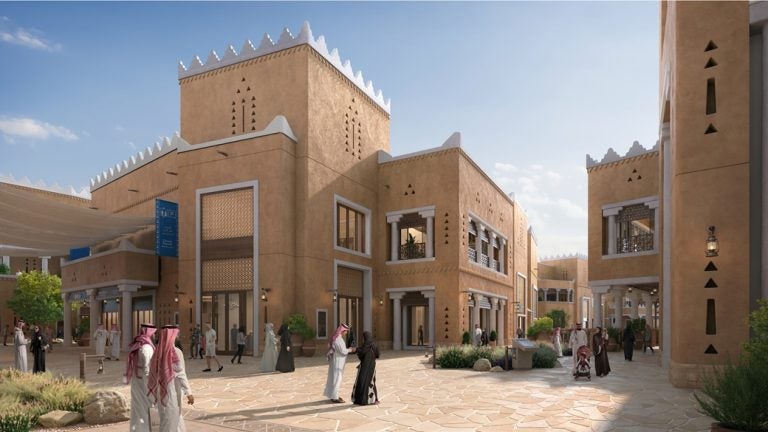
TK: At Diriyah, sustainability is embedded from master planning through to operations. Our approach combines traditional Najdi urban principles – walkability, compact design and passive cooling – with modern infrastructure, smart-city technology and resource-efficient systems.
Ultimately, our objective is to create a destination where sustainability is built into the infrastructure, public realm and operations of the city itself, delivering long-term environmental, social and economic value at scale.
In practical terms, how has Najdi design contributed to the environmental performance of the development?
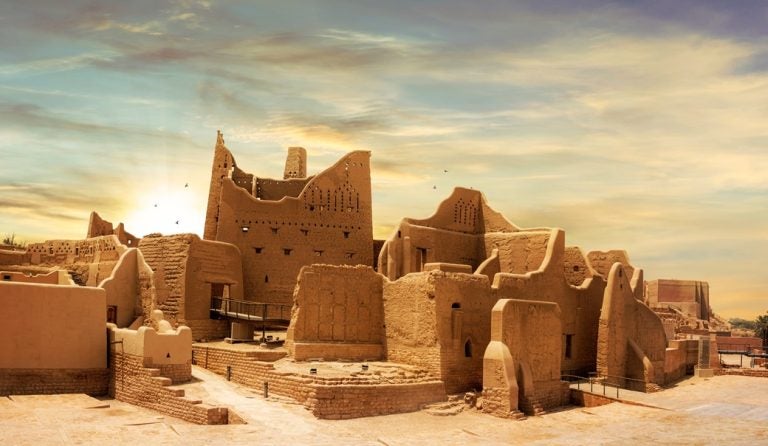
TK: Traditional Najdi design used locally sourced mud bricks, thick walls, compact urban layouts, shaded courtyards and wind towers to provide natural air conditioning and regulate temperatures. These principles minimised the need for energy-intensive cooling and made efficient use of local resources.
We have learned a lot from the past and have adapted many of these principles in our buildings today. For example, mud bricks remain an important element of our development strategy because they can have an embodied carbon footprint around 90% lower than conventional concrete masonry units. At Bab Samhan Hotel alone, their use resulted in over 4,000 tonnes of CO₂ avoidance compared to conventional alternatives.
Diriyah has planned for 50 million visits a year. How has sustainability been engineered to absorb that volume without degrading the environment or the experience?
TK: From the outset, Diriyah was planned as a large-scale mixed-use city, not a standalone visitor attraction. The masterplan integrates homes, offices, hospitality, retail, culture, public spaces and mobility infrastructure. Upon completion, Diriyah will support approximately 100,000 residents, 180,000 jobs and 50 million annual visits.
Ultimately, sustainability in this context is about protecting both the place and the experience. By investing in infrastructure, public spaces and resource-efficient systems from the beginning, we are building a destination that can accommodate significant growth while preserving the character, quality and authenticity that attract people to Diriyah in the first place.
Is a sustainable home or a sustainably built asset now something the market will pay for, rather than expect?
TK: Sustainability has evolved from being a differentiator to becoming an expectation. People today are more aware and better educated about the benefits of sustainability and eco-friendly processes, from how we construct buildings to efficient energy use and water recycling systems.
There is a growing trend among organisations and individuals to expect new projects to already incorporate these kinds of systems and processes, which has helped enhance investor interest and accelerate demand from individual homebuyers through to hotel managers and other companies.
Diriyah Company has earned more than 10 sustainability certifications, including the first Platinum LEED for Cities in the Middle East, and is targeting 22% energy and 50% water savings. Beyond these certifications and targets, what is the development focused on measuring?
TK: Beyond certifications, our focus is on measuring the long-term performance of the destination. That includes emissions, energy and water consumption, resource efficiency, waste diversion and the environmental performance of our buildings throughout their lifecycle.
Equally important is how those outcomes improve the everyday experience of the people who use the city. Cleaner air, shaded walkable streets, native landscaping and less vehicle traffic all contribute to a healthier, more enjoyable urban environment and a higher quality of life for residents, workers and visitors.
At a World Economic Forum meeting in Davos, you noted that what captured people’s attention was how unconventional Diriyah is as a real estate project. Can you elaborate on that?
Most developments begin with land and ask what can be built on it. We started with a place of immense cultural significance and asked how we could build a city that protects its heritage while meeting the needs of future generations. That fundamentally changes every decision, from planning and mobility to sustainability and infrastructure.
We have invested in long-term infrastructure, created a pedestrian-friendly urban environment, integrated culture, hospitality, retail, residential and commercial uses into one connected masterplan, and embedded sustainability from the earliest stages of design.
Rather than relying on high-rise density, we are creating a low-rise, human-centric city across 14 square km, one that offers an authentic sense of place while delivering a vibrant, mixed-use destination. Our ambition is not simply to build another mixed-use development, but to create a city that is authentically Saudi, globally relevant and designed to thrive for generations to come.
Diriyah will have at least eight public parks, more than 17km of trails, 6.5 million indigenous trees and plants, and over 160 EV charging points. How does this kind of landscape and infrastructure investment affect the long-term value of nearby assets?
TK: It enhances the commercial value of the assets while also creating the kind of quality of life and experience that people increasingly look for when choosing where to live, work, visit or invest.
World-class hotel operators, retailers, architects and global partners recognise that long-term value is created by the strength of the destination, not individual buildings alone. By investing in parks, walkable streets, sustainable mobility and future-ready infrastructure, we are creating a destination designed to thrive for decades to come. That benefits our residents, visitors and businesses alike, while ensuring the long-term appeal and value of every asset within Diriyah.
With the first phase now operating, sustainability strategy can be measured against real use. What has the first phase revealed, and how is it shaping the approach to what comes next?
TK: The results we have seen to date demonstrate that our sustainability strategy is working and is aligned with the expectations of our partners.
The restaurants and cafes in Bujairi Terrace, offices and retail outlets in Zallal and the 134-room Bab Samhan, a Luxury Collection Hotel, are already flourishing from our approach to sustainable development, in addition to the museums and visitor experience in our UNESCO World Heritage Site of Al Turaif.
Numerous sustainability awards achieved by Diriyah Company further demonstrate that we are on the right track. As we look to the future, those lessons allow us to build on what is working while continuously improving. Sustainability is not a one-time milestone; it is an ongoing process of learning, adapting and raising the standard to create a city that will thrive for generations to come.
To find out more, download the free, in-depth report on Cultural Capital as an Asset below.